

A Brief Look Into Koka’s Ninja History and Identity
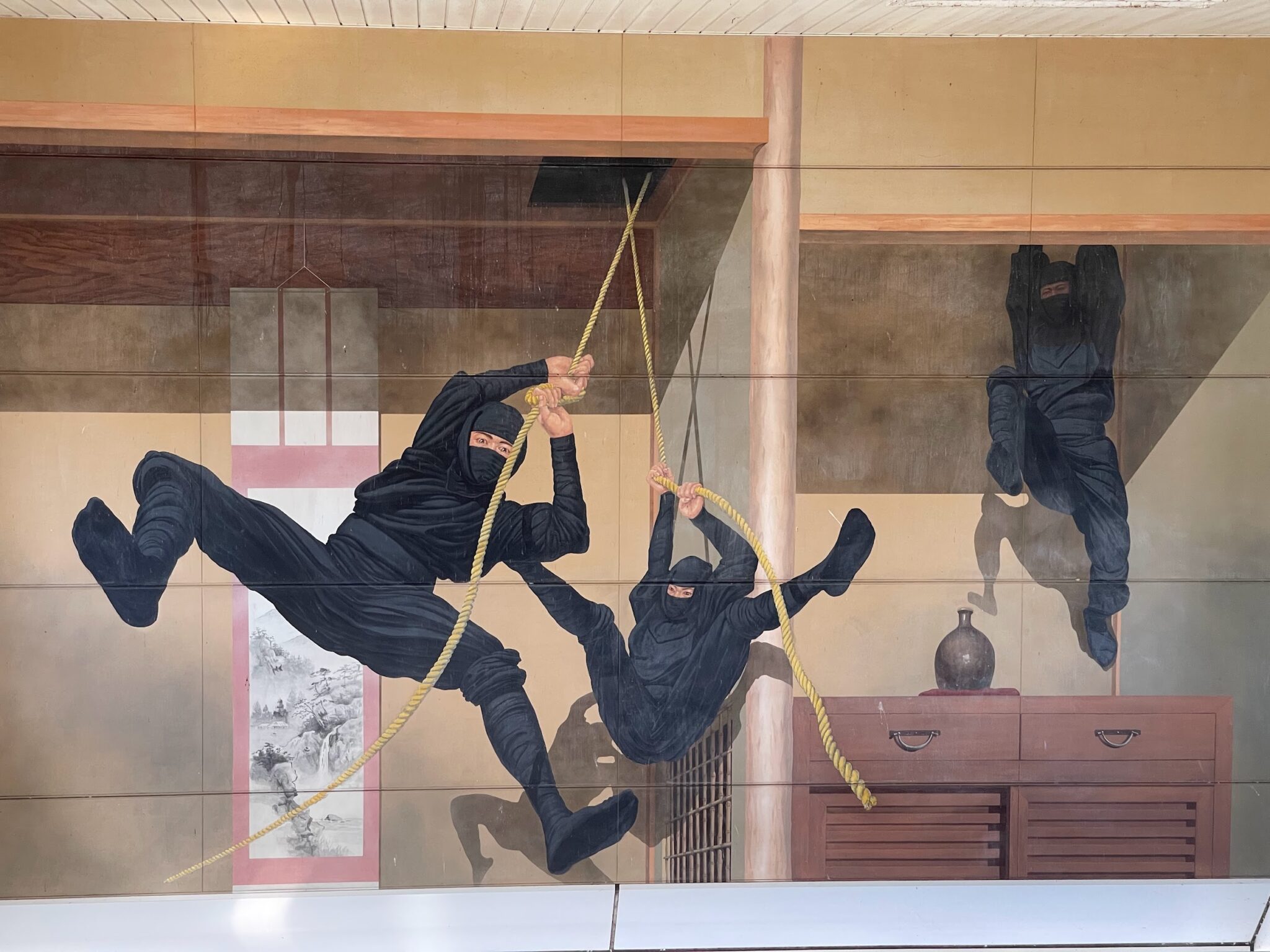
Koka, in Shiga Prefecture, is one of Japan’s most famous ninja areas. Its strategic position, about an hour from Kyoto, meant its shinobi (another word for ninja) were frequently tasked with intelligence gathering near the ancient capital.
The ninja school based here is known as Koka-ryu, which was founded by the Otomo clan. Separately, the Koka clan itself was a highly organized confederation consisting of 53 distinct families.
In their daily lives, ninjas lived as farmers, and they used natural materials from the local environment to craft their tools. When peacetime arrived in Japan, many Koka ninjas transitioned permanently into roles as farmers and medicine makers.
Explore Authentic Ninja History at Koka Ninja House
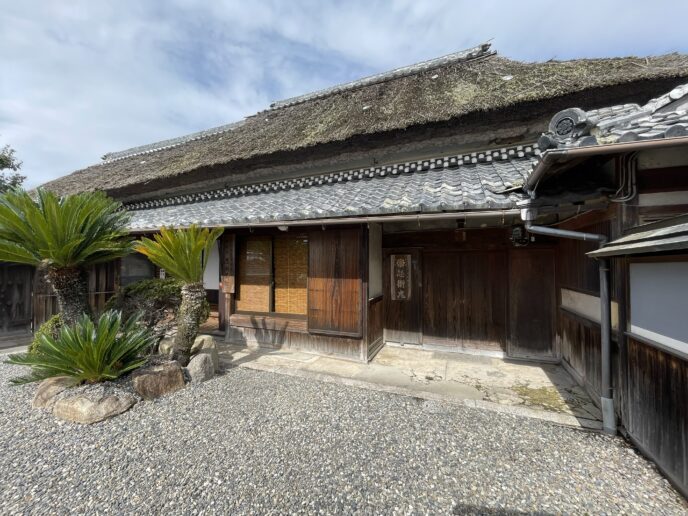
First up on our adventure is the Koka Ninja House, a place where ninjas once lived, located a short bus or taxi ride from Konan Station on the JR Kusatsu Line.
This house was built roughly 300 years ago for the leader of the Koka clans, Mochizuki-izumo-no-kami. From the outside, it looks like any other traditional Japanese home. But that’s precisely the point. This façade hides several secrets within, and any intruder would be in for a very difficult time.
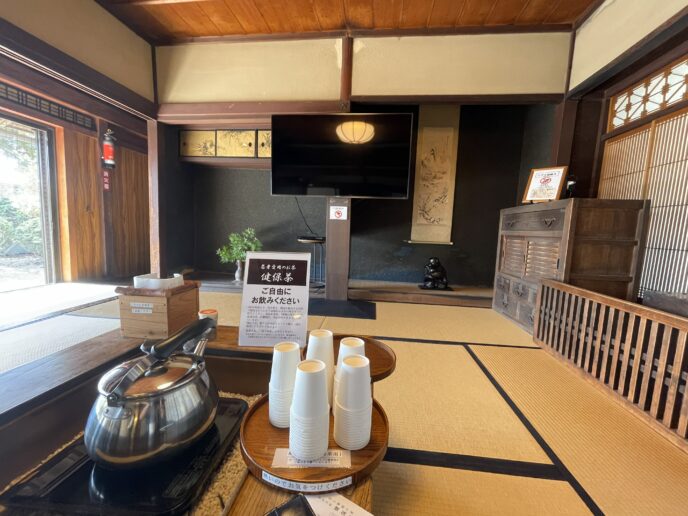
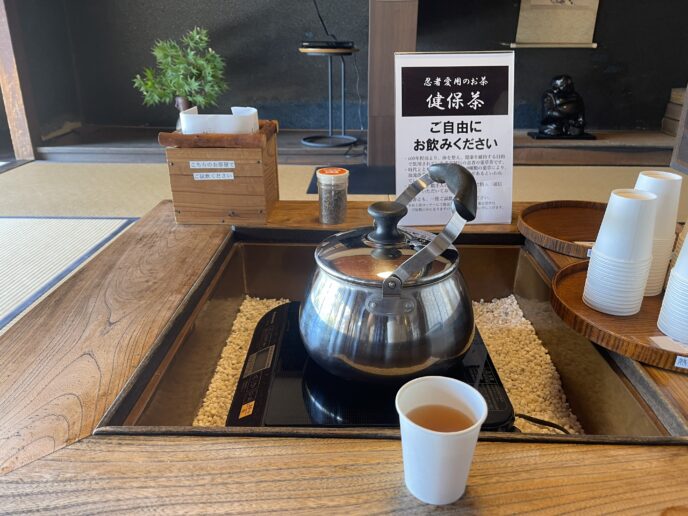
The tour of the home begins in the main tatami room after you’ve slipped off your shoes. They have a pot of Kenpocha waiting, a medicinal tea made with several herbs that ninjas themselves supposedly drank. It’s surprisingly fragrant and quite nice. It’s the perfect thing to sip while you settle in and watch the 10-minute introductory video.
The video, complete with English and Chinese subtitles, sets the scene and offers a historical background of both the area and the house itself.
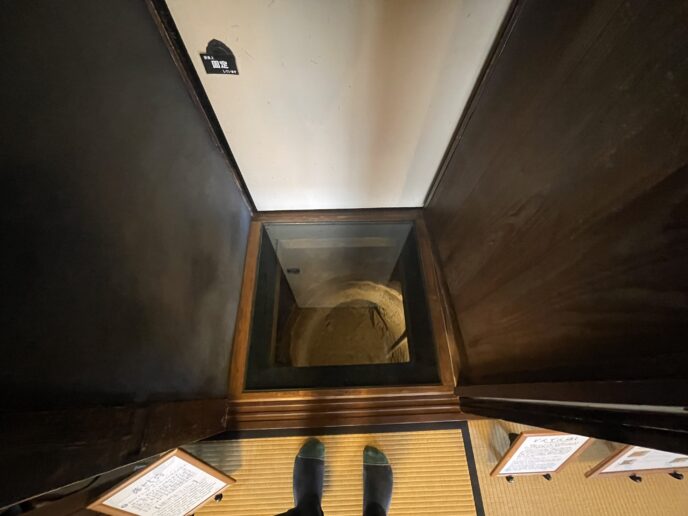
As you move through the house, you’ll find audio guide stations that provide details about each area. One of the first secrets you’ll encounter is a trapdoor. Though sealed with thick glass, you can still look down the three-meter drop that awaited any unwelcome visitors.
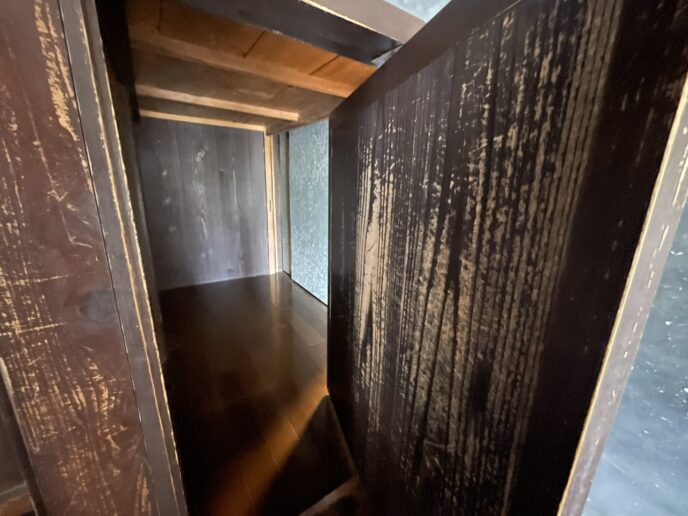
The first floor features a clever revolving wall disguised as a regular panel. When pushed, the door swiftly rotates 180 degrees. This allows someone to instantly slip through and vanish, causing any unsuspecting pursuer who tries to follow the same way to slam directly into the solid wood.
Another ingenious feature is a retractable hidden ladder. Now, how many floors do you think this house has? If you guessed two, you’d be mistaken. It actually has three floors, with the second floor a mere meter high.
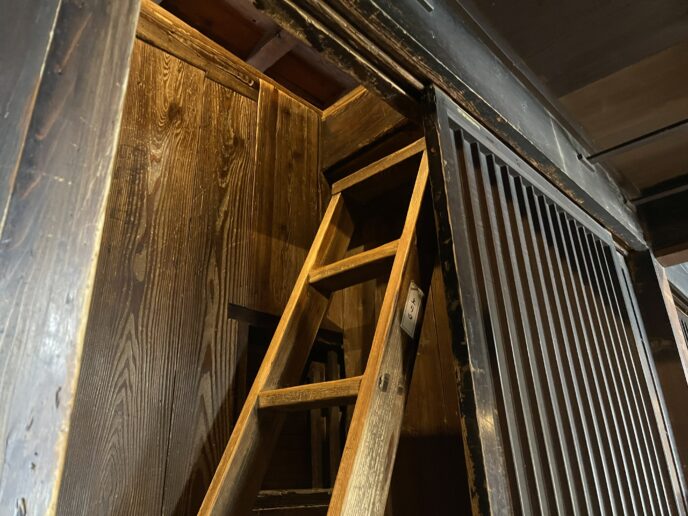
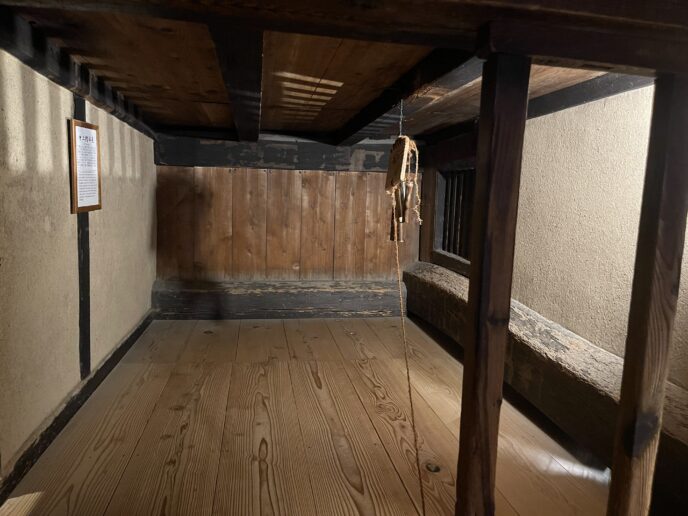
This makes it a perfect hiding spot for defense or covert observation. The cramped space also hinders combat, as it’s nearly impossible to wield a full-length sword. The third floor was primarily for clan meetings.
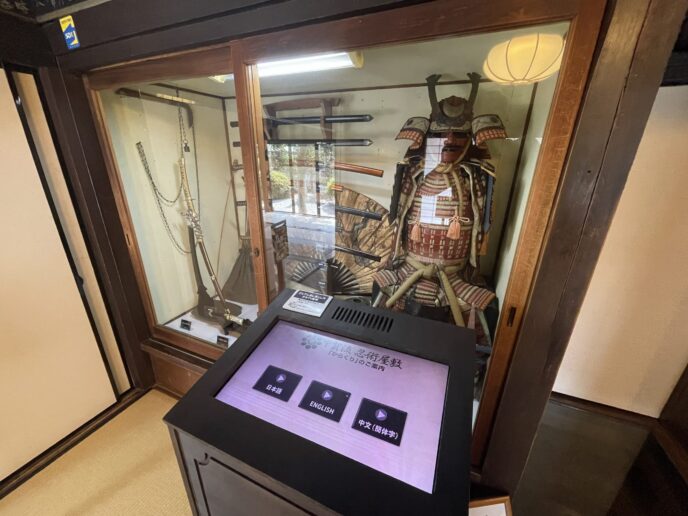
On your way back down, you can explore the exhibit area where they keep the authentic tools and weapons actually used by ninjas, as well as scrolls.
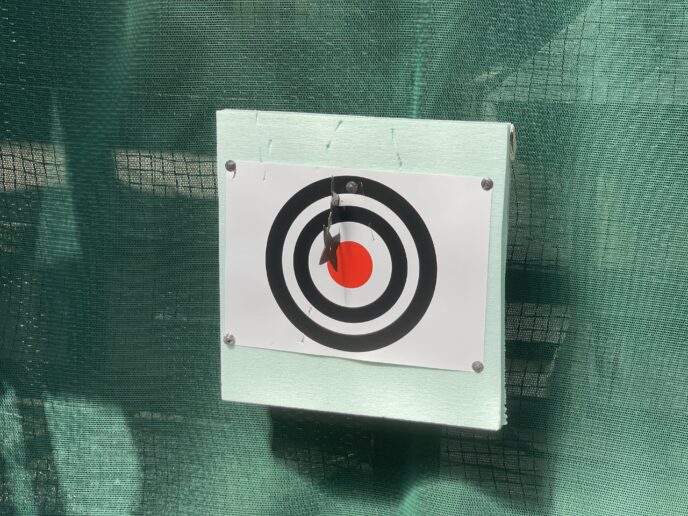
And be sure to give ninja star throwing a shot! For 300 yen, you can throw shuriken at a target. They’ll even show you how it’s done.
Don’t forget to stop by the gift shop on your way out, where you can find many ninja souvenirs. They have real and replica shuriken, ninja-themed towels, pins, mugs, and even a refreshing bottle of Koka Cola (not to be confused with the major brand).
There’s a lot more to the house than meets the eye, so we encourage you to explore it yourself!
Website: https://www.kouka-ninjya.com/la_en/
Experience Ninja Training in Koka Ninja Village
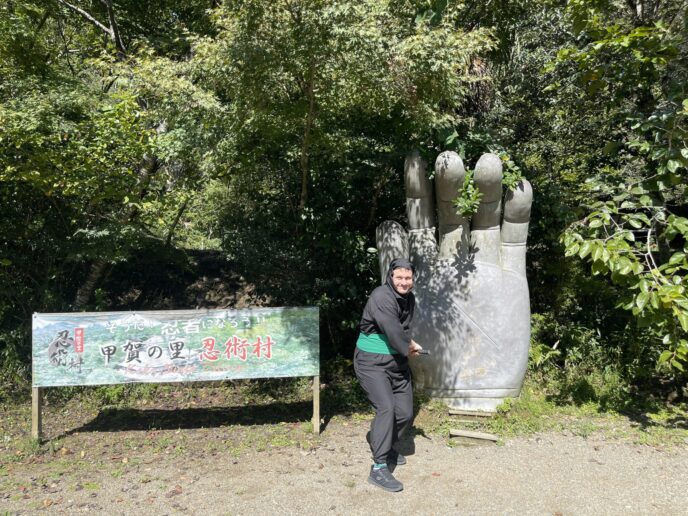
With the basic knowledge of ninja history under your belt, it’s time to level up your physical skills. To do that, we’re off to Koka Ninja Village.
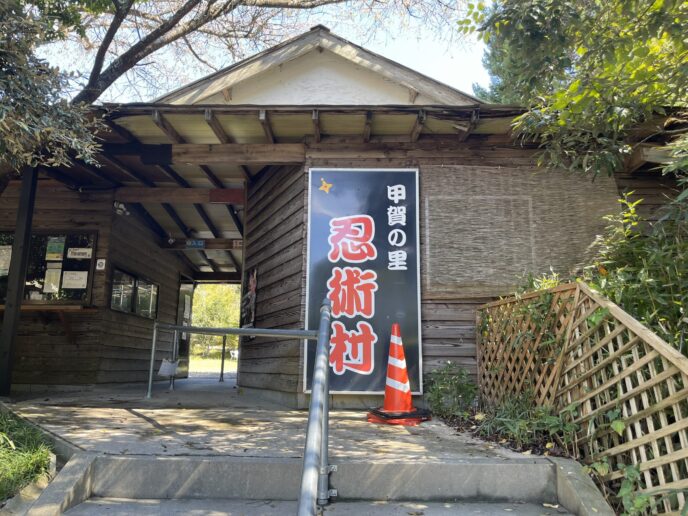
The training begins at the JR Koka train station! The first mission is to contact the Koka Ninja Village upon your arrival. The village provides a courtesy pick-up at the north terminal of Koka Station (contact required).
From there, you’ll head into the rugged heart of Koka. The village itself is set against a backdrop of grand, untamed nature.
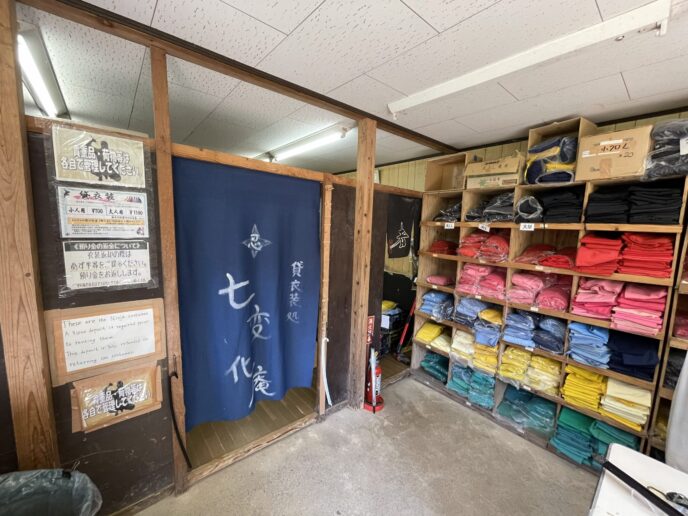
Upon arrival, ninja costumes are available for rent in a variety of colors and sizes. Let’s transform! Getting into the outfit might be a bit tricky, so consider it a light warm-up before your actual training begins.
Properly dressed, we begin by training our minds at the Karakuri House. To help you understand the history, the staff here offers explanations in Japanese, English, and Chinese. This house originally belonged to the Fujibayashi clan and features ninja’s tricks.
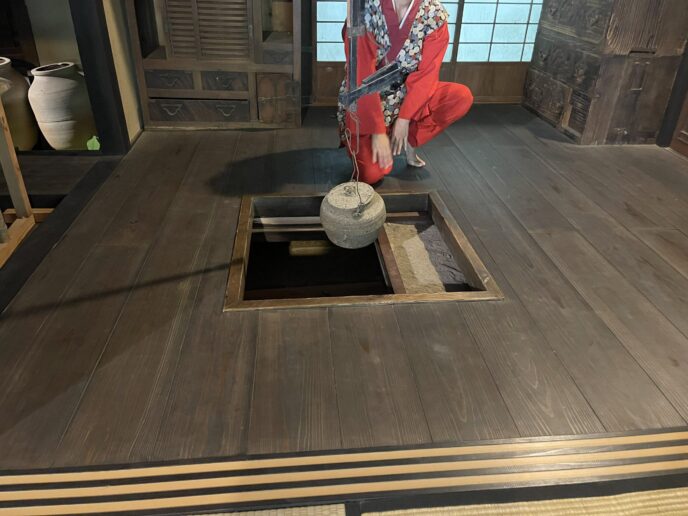
The traditional sunken floor stove, for example, looks normal, but it’s retractable and exposes a hidden escape route, allowing a fast escape.
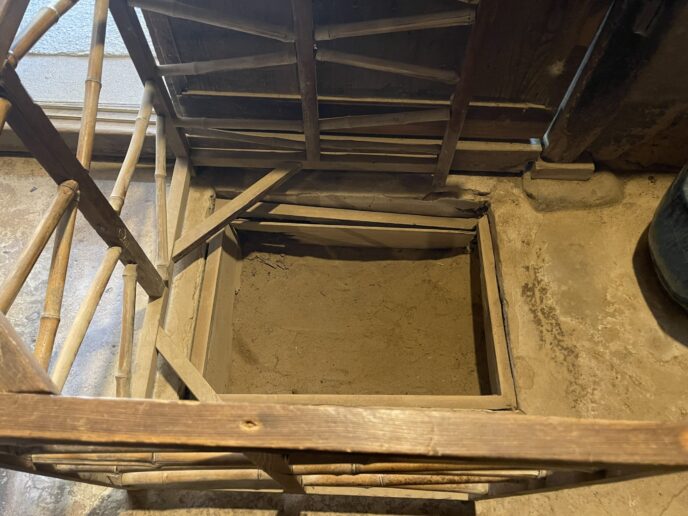
Watch your step for the ashibarai, or “foot sweeper.” It appears to be a simple hole in the floor, but it was designed to trap an intruder’s leg, leaving their shin perfectly exposed for a defender’s attack.
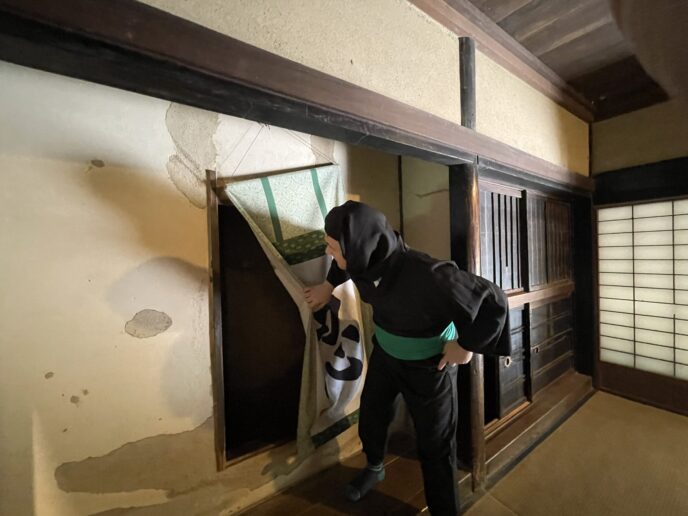
As you explore the house, you’ll find many more gimmicks, but we’d rather not ruin the surprise for you, so you’ll have to discover them for yourself.
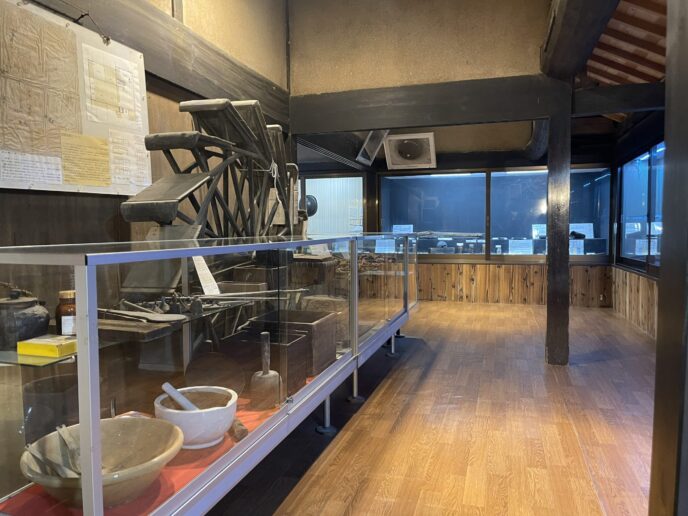
Next up, you’ll visit the Koka Ninjutsu Museum. This museum houses a remarkably large and diverse collection of authentic ninja tools, weapons, and essential documentation. Inside, you can examine historical scrolls and see firsthand the cleverly concealed weapons and everyday items they adapted for espionage and survival.
And now that you’ve sharpened your mind, you can test your mettle at the Nine Ninja Dojos.
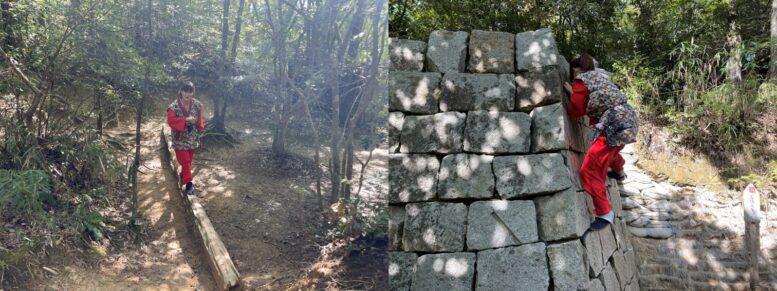
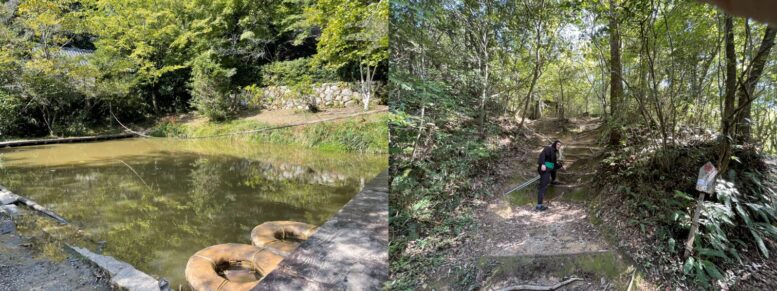
These nine challenges are the core of the village experience. You will navigate a set course designed to test your agility, strength, and balance, ranging from scaling high walls to the iconic challenge of walking across water using “mizugumo” (float-like rings).
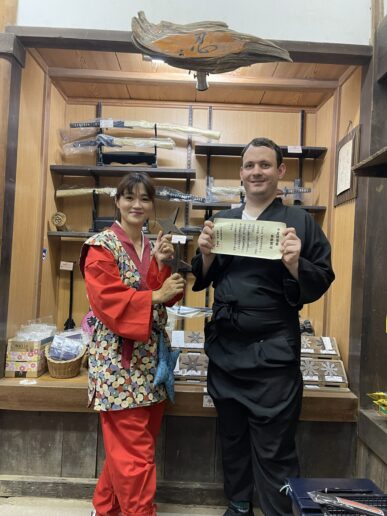
It’s certainly challenging, but we highly encourage you to attempt every challenge, even those you suspect you might fail at. For those who endure the training, a certificate of completion awaits—a fine souvenir of your efforts. From start to finish, the entire course takes about two hours to complete.
Before heading home, make sure to visit the gift shop. The shop is well-stocked with ninja paraphernalia—from plushies to swords—should you wish to take a piece of the shadow world home with you.
Live out your ninja fantasy at the Koka Ninja Village! It’s a fun and exciting experience, perfect for visitors of all ages, including young children.
Website: https://koka.ninpou.jp/index.html (Japanese only)
Exploring Mt. Hando: The Path to Becoming a Ninja
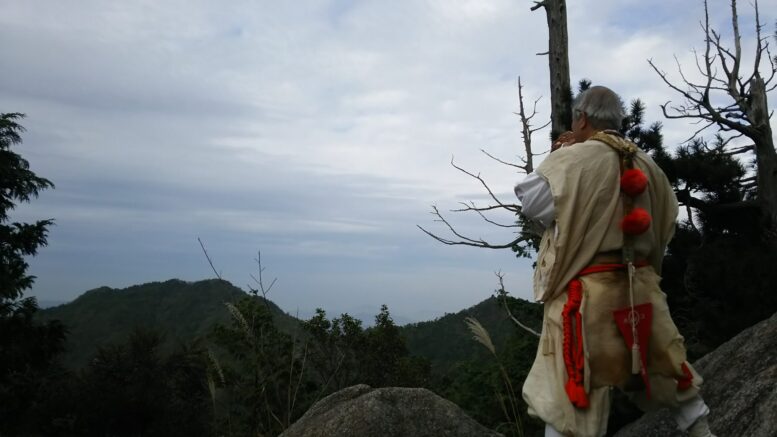
Legend holds that Mt. Hando was once a hidden training ground for the mysterious Koka Ninja. This peak is one of the designated “Koka Three Sacred Mountains” and has long been a center for Shugendo (mountain worship), providing an ideal environment for training both body and mind.
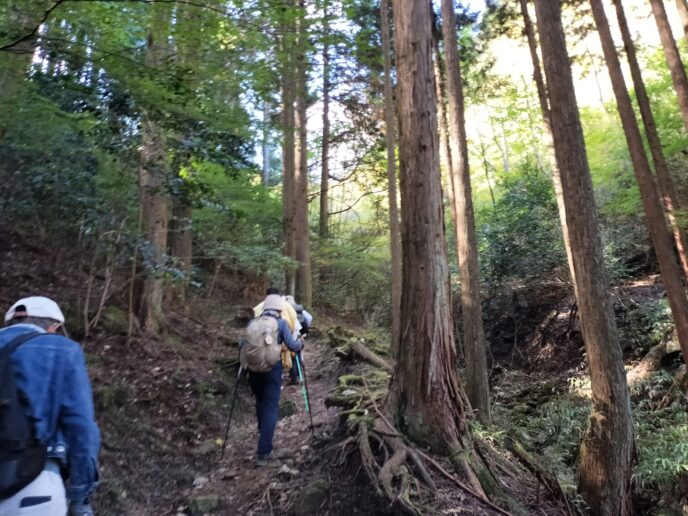
While the hiking route is relatively short and easy to follow, do not underestimate the terrain. The trail is characterized by steep, winding slopes that can be physically demanding. As you ascend, you will encounter the imposing ruins of a once-great temple complex that boasted over 20 sub-temples. The magnificent stone walls remaining at the ruins of Chishaku-in Temple and Tosho-gu Shrine resemble castle fortifications and serve as a silent testament to the mountain’s past.
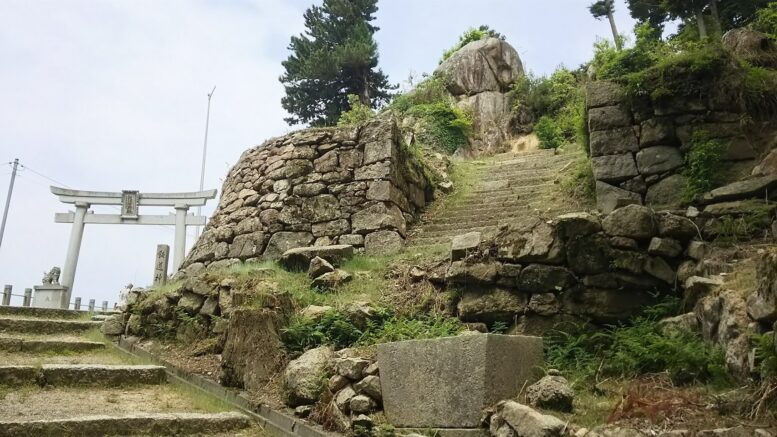
Hikers should tread carefully, as the ruins contain hidden hazards like old wells and stumps. At the summit lies Hando-jinja Shrine, showcasing exquisite Momoyama-style architecture and providing sweeping panoramic views of the Koka region.
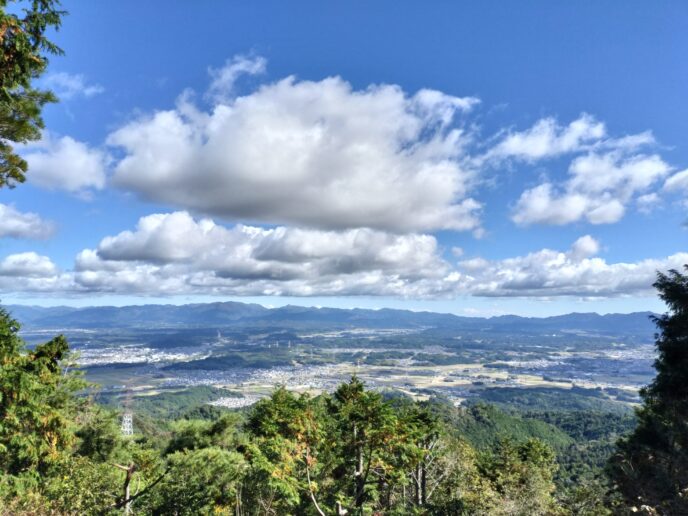
Learn more about Mt. Hando (Japanese only)
Getting to Koka: Access from Kyoto, Osaka, and Nagoya
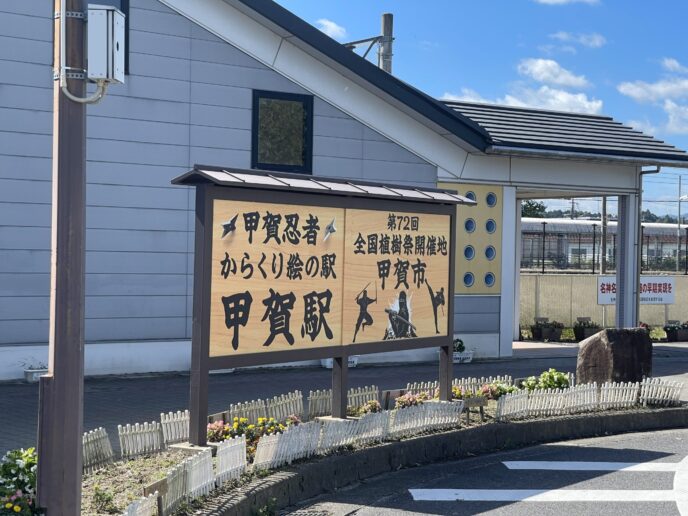
Koka is easily accessible from major cities like Osaka, Kyoto, and Nagoya. Here’s how to get here from these major cities:
- From Osaka or Kyoto: Take the JR Tokaido Special Rapid Service to Kusatsu Station, then transfer to the Kusatsu Line, which goes to both Konan and Koka Station.
Travel time: roughly 1.5 hours from Osaka, 1 hour from Kyoto
- From Nagoya: Take the Shinkansen from Nagoya to Maibara Station in Shiga. At Maibara, switch to the JR Tokaido line and ride it to Kusatsu Station. Finally, board the JR Kusatsu line, which will take you to either Konan or Koka Station, depending on your final destination.
Travel time: roughly 2 hours
Keep in mind that trains in this area run infrequently, typically only once an hour, so be sure to check the schedule. Also, unlike in larger cities, you’ll likely need to press a button to open the train doors.
Tips for an Unforgettable Ninja Experience
- Enhance your experience and understanding by booking a tour with a knowledgeable guide. Contact the Biwako Visitors Bureau if you need assistance finding a guide.
- Bringing cash is highly recommended for exploring this rural part of Shiga Prefecture.
- Wear comfortable and appropriate clothing for walking and potential hands-on activities.
- Always respect signs indicating “No Photography” and areas marked as “No Entry.”
Frequently Asked Questions
Q: What is the difference between Koka ninja and Iga ninja?
A: The main distinction between Iga and Koka (Koga) ninja lay in their origins, with each group’s unique skills and allegiances shaped by their home regions. Iga ninja originated from northwestern Mie Prefecture, whereas Koka (Koga) ninja were based in southern Shiga Prefecture.
Q: Who is the most famous Koka ninja?
A: Sasuke Sarutobi is arguably the most famous Koka ninja. He became incredibly popular, especially after the late Meiji period, thanks to books and the Tachikawa Bunko series. Now, he’s recognized as the definitive “Koka ninja” through manga, TV, and other media.
Q: Were the Iga and Koka enemies?
A: The Iga and Koga ninjas often maintained cooperative relationships, sometimes forming mutual defense alliances through gatherings or federations at their borders. During the Warring States period, there are records of cooperation between the two clans, such as during Tokugawa Ieyasu’s crossing of Iga.
Ready to Train? Your Ninja Adventure Awaits!
Koka offers an authentic glimpse into a legendary past found nowhere else in Japan. Step off the beaten path and into the shadows. Your true ninja adventure begins here.